
Why Your Website Traffic Dropped After a Google Core Update (And How to Fix It)
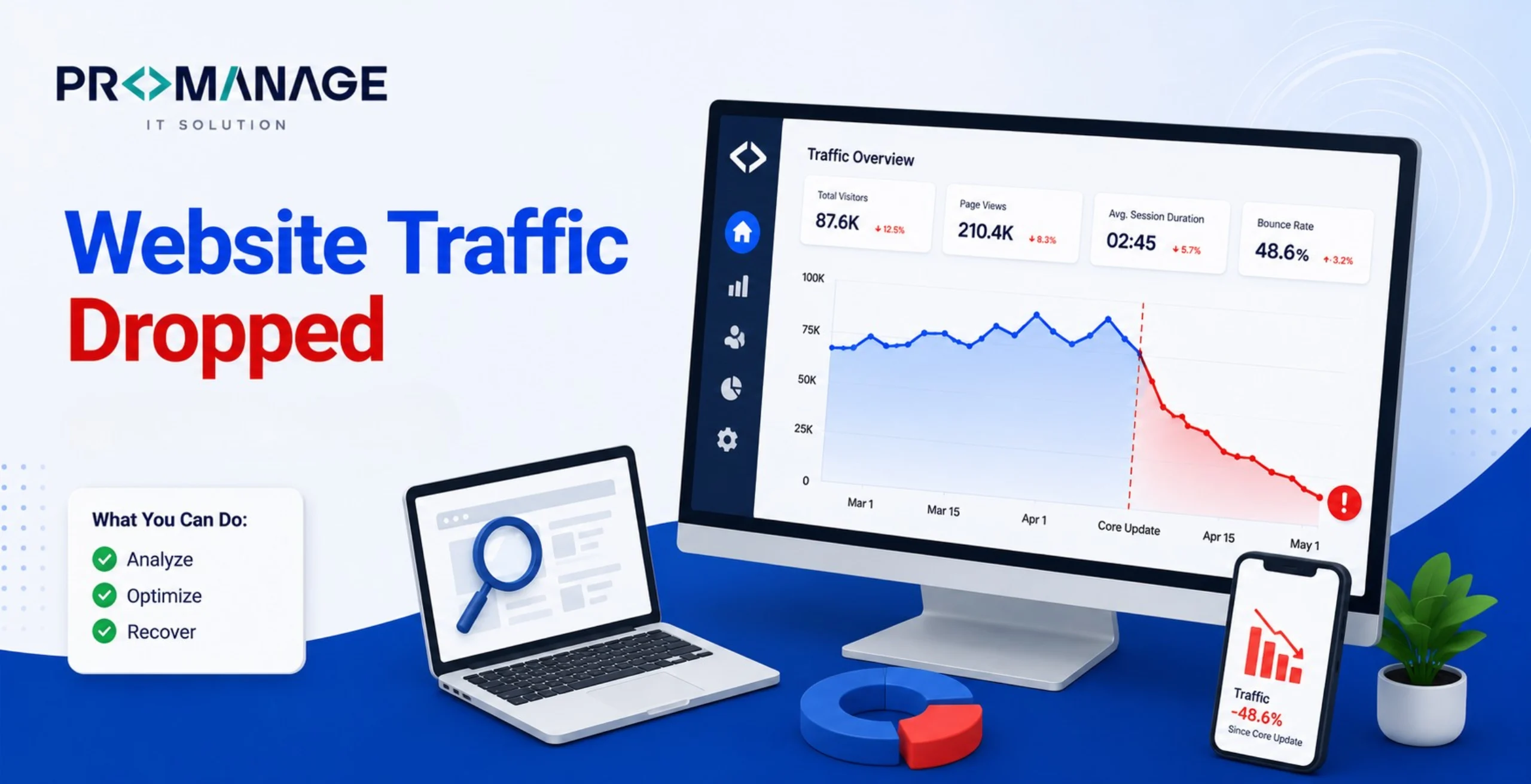
You woke up one morning, checked Google Analytics, and felt your stomach drop. Traffic is down 20%, 40%, maybe 60%. After some investigation, you discover Google rolled out a Core Update recently. Now what? This guide explains exactly what happened, why it happened to your site, and the specific steps to recover, based on how Google’s algorithm actually evaluates content.
What Is a Google Core Update?
A Google Core Update is a broad change to Google’s main search algorithm. Unlike targeted updates (like the Spam Update or Link Spam Update that target specific bad practices), Core Updates reassess how Google evaluates the overall quality and relevance of content across all websites.
Google releases 3–4 major Core Updates per year. Each one causes significant ranking shuffles across virtually every niche. Some sites gain dramatically; others drop significantly. The key point: a Core Update is not a penalty. It is a recalibration of Google’s understanding of what content deserves to rank highest for any given search query.
| Important Distinction: A traffic drop after a Core Update does not mean you violated Google’s guidelines. It means other content is now being judged as more relevant, more trustworthy, or more helpful than yours. The fix is to improve your content quality, not to file a reconsideration request. |
Step 1: Confirm the Cause Is Actually a Core Update
Before assuming a Core Update caused your traffic drop, rule out other possibilities:
- Check Google Search Console for any Manual Actions (Penalties tab)
- Verify no major technical issues: server downtime, robots.txt blocking, noindex tags added accidentally
- Confirm your Analytics tracking code is still firing correctly
- Check if the traffic drop coincided with a Google Update using resources like Google Search Status Dashboard or Semrush Sensor
- Look at which pages lost traffic, if it is sitewide, a Core Update is likely; if it is specific pages, a targeted update may be the cause
Step 2: Identify Which Pages Were Hit
Open Google Search Console and filter by date range: compare 3 months before the update vs. 3 months after. Look at:
- Clicks and Impressions: Which URLs saw the sharpest decline in both clicks and impressions?
- Average Position: Did positions drop on pages that previously ranked in Top 10?
- Queries: Did you lose rankings for specific keyword clusters? This tells you which topic areas Google now evaluates differently.
Export this data to a spreadsheet. Prioritize the top 20 URLs that drove the most traffic before the update, these are your recovery priorities.
Step 3: Diagnose the Real Problem Using Google’s Own Framework
Google’s Core Updates are now heavily guided by E-E-A-T: Experience, Expertise, Authoritativeness, and Trustworthiness. Ask these questions about your affected pages:
Experience
Does the content demonstrate real first-hand experience? A review of a hotel should feel like someone who actually stayed there. A guide to fixing a car engine should read like it was written by someone who has done it. AI-generated or purely researched content that lacks genuine experience signals is frequently devalued in Core Updates.
Expertise
Is the author qualified to write about this topic? Is expertise demonstrated through depth, accuracy, nuance, and original insight, not just length? A 3,000-word article full of generic information ranks worse than a 1,200-word article with specific, actionable expert insight.
Authoritativeness
Do other reputable sites in your niche link to your content? Do you have author bio pages with verifiable credentials? Is your brand mentioned in industry publications? Authority is largely built externally through backlinks and brand mentions.
Trustworthiness
Does your website have a clear About page, contact information, privacy policy, and terms of service? Are there spelling errors, outdated statistics, broken links, or misleading claims? Trustworthiness is foundational, everything else collapses without it.
Step 4: The Core Update Recovery Checklist
- Audit all affected pages for thin content, under 600 words with low depth
- Add author bios with credentials to all article and blog pages
- Update statistics, case studies, and examples to reflect current data (2025–2026)
- Add original insights, first-hand examples, or unique data that competitors cannot replicate
- Improve E-E-A-T signals: About page, team page, awards, press mentions, certifications
- Fix all Core Web Vitals issues, page speed is now a confirmed ranking signal
- Remove or consolidate low-quality pages that dilute overall site authority
- Build 5–10 high-quality backlinks to your most affected pages
- Ensure internal linking clearly signals which pages are most important
- Review your content against Google’s helpful content guidelines, write for people, not algorithms
Step 5: What Not to Do After a Core Update
Many site owners make recovery worse by taking reactive, misguided actions:
- Do not change URLs: Changing URL slugs creates redirect chains and loses accumulated link equity
- Do not delete pages immediately: Deleted pages with backlinks lose that link equity permanently; redirect or improve them instead
- Do not over-optimize: Stuffing keywords harder into content after a Core Update typically makes things worse, not better
- Do not expect overnight recovery: Even after fixing all issues, Google needs to recrawl, reindex, and re-evaluate your site. Recovery typically takes 1–3 months minimum, and often coincides with the next Core Update rollout
| Real Timeline Expectation: Recovery from a Core Update typically takes 3–6 months of consistent improvement work. Sites that see the fastest recovery are those that make substantive, genuine improvements, not surface-level tweaks designed to game the algorithm. |
Frequently Asked Questions
My competitors also lost traffic after the update. Does that mean my site is fine?
A: Not necessarily. Widespread drops can mean the entire niche is being re-evaluated. You still need to improve your content quality, the sites that recover fastest after a Core Update are those that proactively improve, not those that wait.
Will my rankings automatically recover when the next Core Update rolls out?
A: They might, if you have made genuine improvements. Google has stated that Core Updates can partially reverse previous drops if the quality signals have improved. However, recovery is never automatic; it requires active work.
Should I disavow backlinks after a traffic drop?
A: Only if you can identify clearly spammy, manipulative links pointing to your site. Disavowing good or neutral links is harmful. A Core Update traffic drop is almost never caused by backlinks, it is almost always a content quality issue.
Is there any way to predict which sites will be hit by a Core Update?
Not perfectly, but sites with thin content, heavy AI-generated articles, weak E-E-A-T signals, or slow page speed are consistently more vulnerable. Building genuine authority and quality is the only reliable protection.

Related Posts










SEO Team Lead
Preeti is a skilled SEO Team Lead passionate about boosting organic traffic and improving search rankings. She leads with data-driven strategies to help businesses grow online effectively.